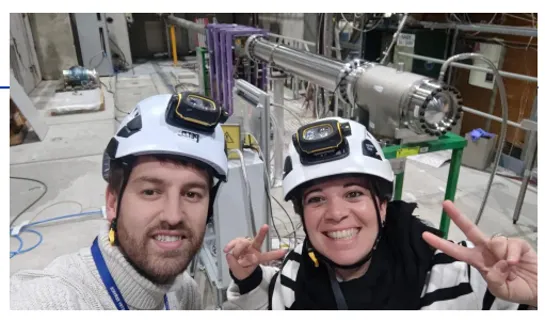
XCET Redefined: A New Era for Particle Detection at CERN
21 DECEMBER, 2024 | By Giulia Romagnoli & Jan Buesa Orgaz for the XCET team

For 50 years, the threshold Cherenkov Detectors (XCET) have stood quietly on CERN’s Experimental Areas lines, patiently identifying particles with unwavering reliability. Each XCET detector is a clever piece of engineering. Inside its horizontal tube, filled with the required gas, particles pass through thin entrance and exit windows, producing Cherenkov light. A 45° mirror deflects this light toward an optical window and photomultiplier tube, which registers the signal. These detectors are found across CERN’s facilities: four in the East Area, eight in the North Area beamlines, and four in the very low energy beamlines serving the Neutrino Platform experiments.
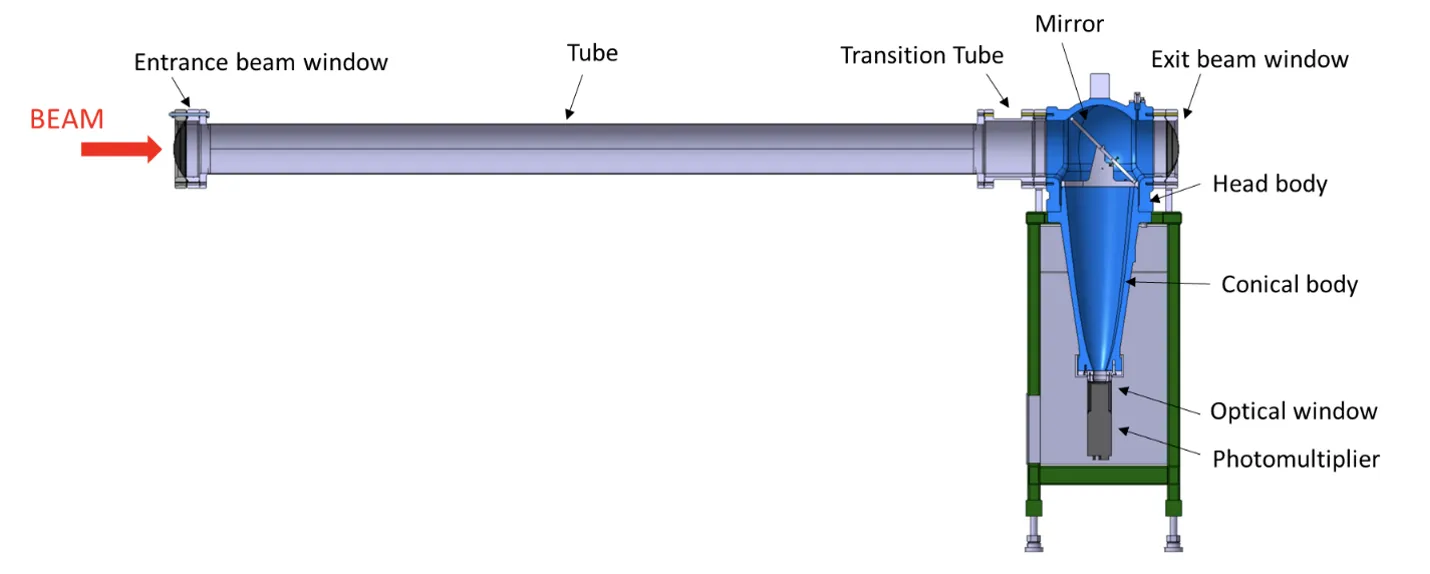
But 50 years is a long time for any technology. The XCET detectors are showing their age, and the need for consolidation has become clear. Obsolescence – particularly in the detector bodies and mirrors – isn’t the only driver. Meeting modern safety standards is crucial, especially since these detectors operate as pressurised vessels and should get clearance from CERN’s HSE Unit (Occupational Health & Safety and Environmental Protection Unit) before installation. This year marked a turning point. For the first time since their installation, a brand-new XCET detector prototype was designed, built, and tested.
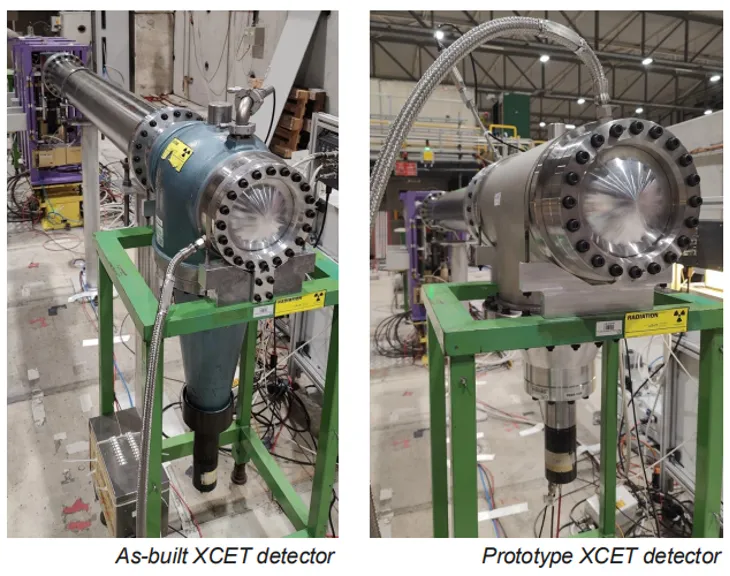
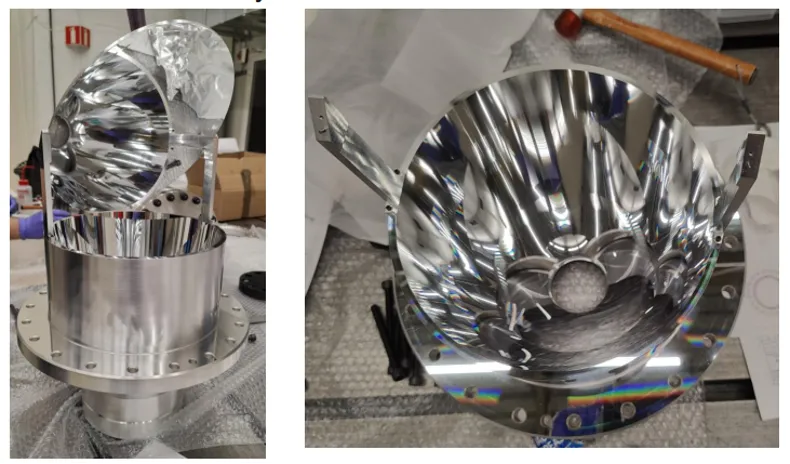
The prototype features a sleeker, more efficient design, incorporating a Compound Parabolic Concentrator (CPC) to improve photon collection performance. Guided by Geant4 simulations of light reflection behaviour, the CPC mirror was machined with diamond-turning precision from Aluminum EN AW-6061, designed to minimise costs while enhancing performance. HSE lifted all restrictions on the new prototype, granting it full approval for use in CERN’s experimental areas.
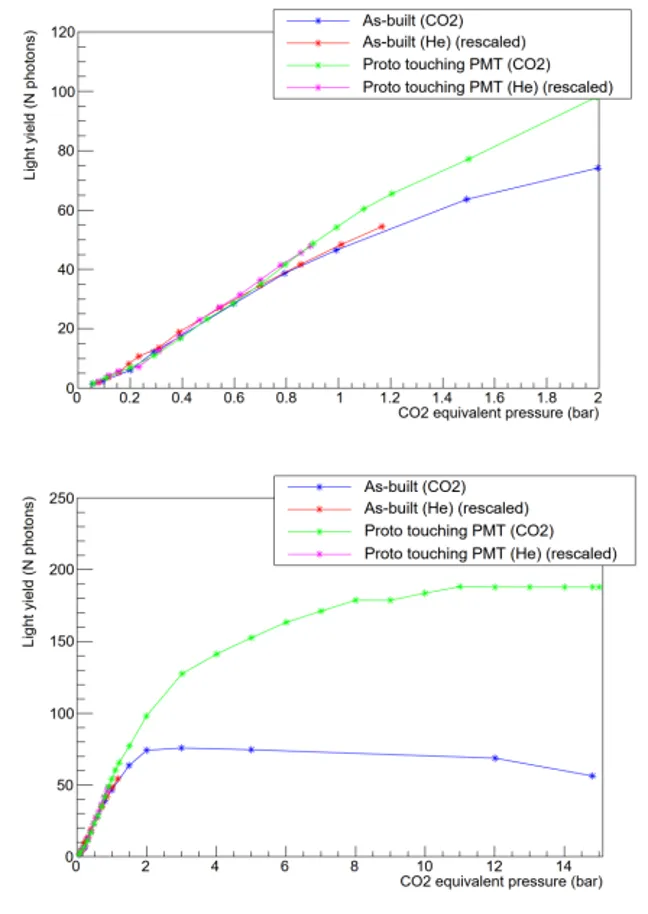
Testing took place in October 2024 on the H8 beamline in EHN1 PPE158. The prototype was put to test with gas pressures ranging from 0.05 bar to 15 bar, using CO2 and helium. The results? A resounding success.
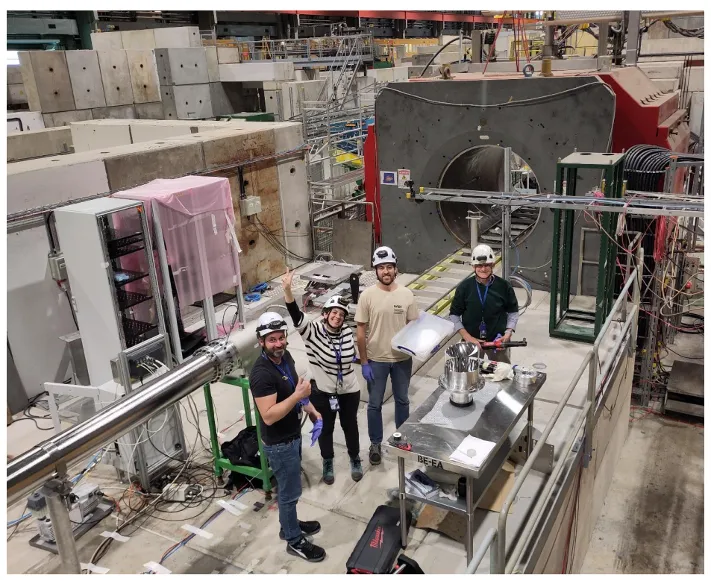
The journey wasn’t without its quirks – debugging hiccups, last-minute tweaks, and a bit of improvisation (one fix involved stealing a pencil holder). The team even ran out of gas late on a Friday evening. Yet, the prototype performed beautifully. At low pressures, it matched the performance of the older detectors, while at 1 bar of pressure, it significantly improved the light yield.
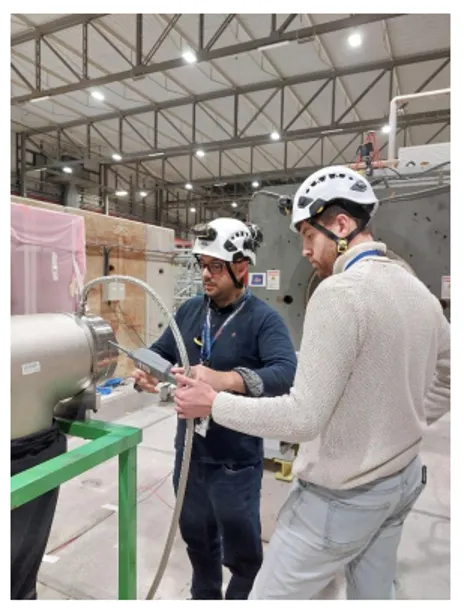
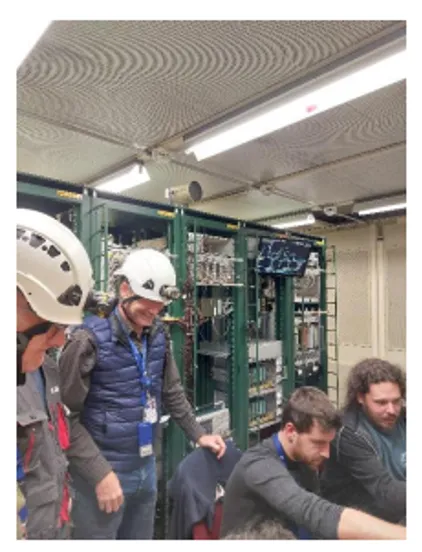
Over the coming years, it will guide the production of shiny, reliable new XCET detectors, ready to tackle the next 50 years of particle detection in CERN’s Experimental Areas.