
CEDAR Upgrade: from 1975 to EYETS 2022

1 DECEMBER, 2021 | By Antonio Lafuente
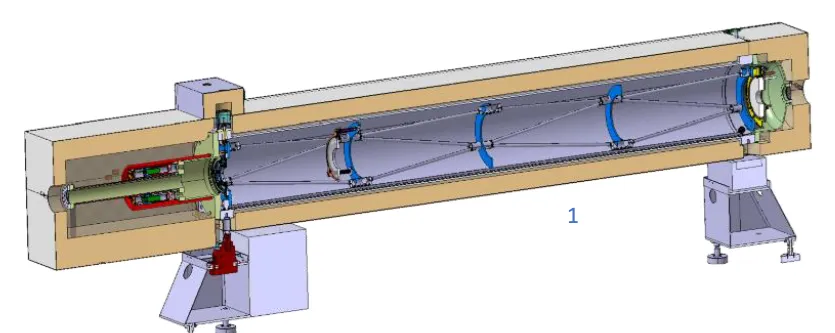
The CEDAR’s (Cerenkov Differential counter with Achromatic Ring Focus) were designed at CERN between 1975 and 1980 and use a highly performant optical system to identify a particle by detecting only the Cerenkov light emitted at a precise angle by particles of a specific rest mass.
Two types of CEDAR’s have been designed and built, CEDAR-N (North) and CEDAR-W (West), corresponding to two different emission angles for the Cerenkov light detected. A study started in 2008 proposed using H2 to further improve the detectors sensitivity and reduce the background for future experimental campaigns, but it was soon realized that this would not be possible without a new set of optics optimized for the new gas and operating regime.
This situation triggered an effort that has been unfolding over the last years to substantiate the new detector and consolidate the necessary infrastructure in preparation for its installation in NA62 during EYETS 2022. 2021 was a year of paramount importance for the project.
An order was finally placed to produce the Mangin mirror and the chromatic corrector, the two core optical components made from high-quality quartz blanks with extremely tight polishing requirements. Installing new optics implies aligning them with angular precisions in the order of micro-radians. This procedure is undocumented and was last exercised 40 years ago, which meant developing a laser-based alignment protocol in collaboration with our colleagues from SY-BI. The commissioning of the new counter will require deploying the necessary infrastructure in H6 both for data acquisition and the gas supply. An undertaking not for the faint of heart considering the risks associated with H2 and the potential of an ATEX explosive atmosphere. Last but not least, this campaign has been accompanied by a monumental effort in collaboration with the Design Office to document and prepare as-build models and reverse engineer a number of undocumented mechanical components. All in all, a fine example of forensic and reverse engineering.