
HL-LHC: WP8/WP12 LS3 in full swing

6 DECEMBER,2020 | By Markus Brugger
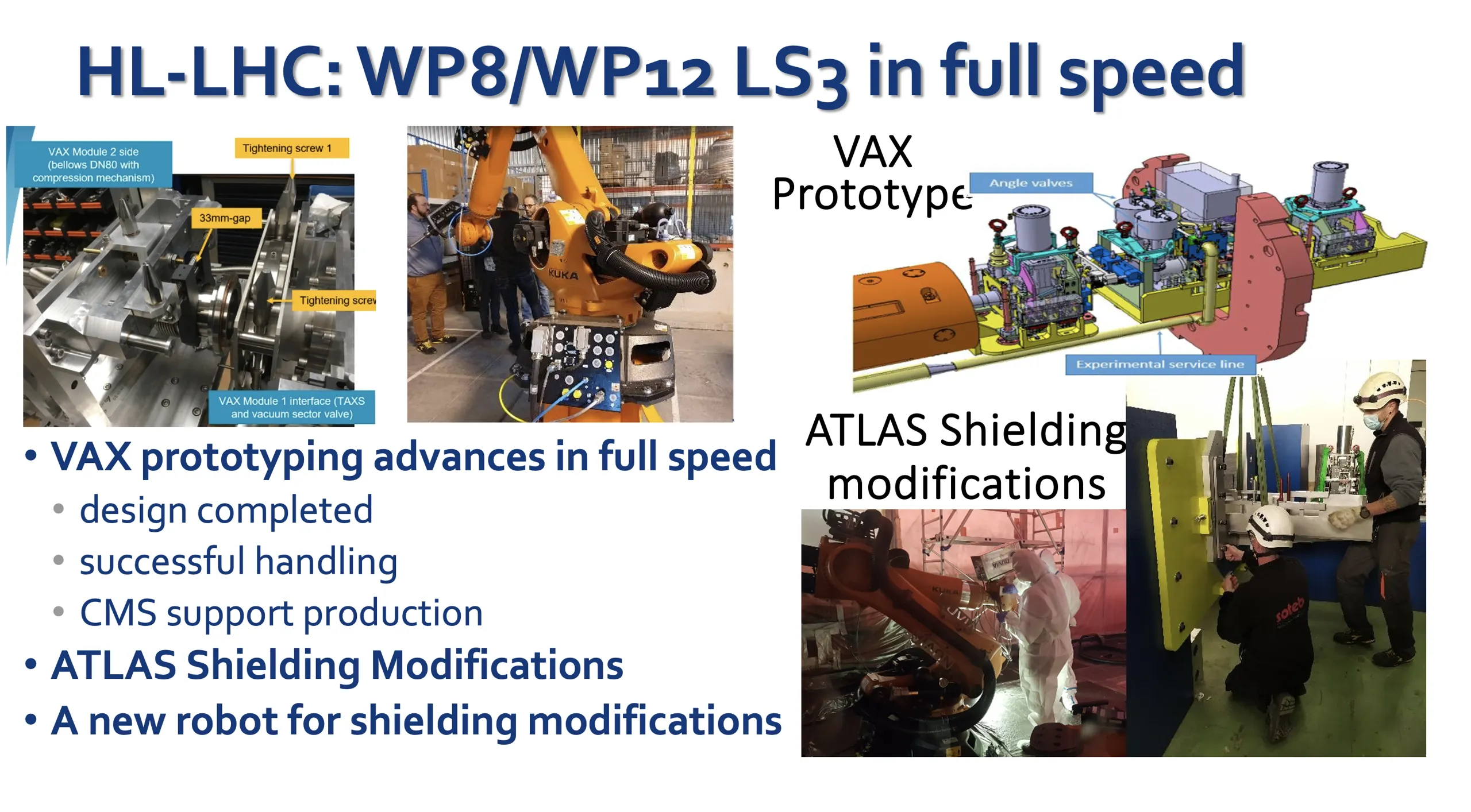
LS2 forms an essential preparation phase for the HL-LHC project. Related important injector upgrades (LIU) were finalized over the past years and during recent months re-commissioning has already started in several machines. The end of LS2 and the start of 2021 operation for CERN’s injector chain will thus conclude a first essential phase paving the way for the final implementation of the HL-LHC project. Though LS3 might seem far away, HL-LHC implementation activities were similarly intense already before as well as during LS2. In this context, our group is intensively involved and leading the Machine-Detector Interface (MDI) work-package HL-LHC WP8. If you remember, last year we were looking together at the first HL-LHC beamline element to be installed in the LHC (the TANB at P8 – see link). WP8 carefully considers future physics requirements at the interaction point and in the forward region and addresses required MDI modifications in close collaboration with the experiments and other High Luminosity work packages, as well as equipment and service groups. In this context WP8 oversees the deinstallation of the of the secondary and neutral absorbers (TAS, TAN), their design, manufacturing, and installation in the LHC machine, and the overall layout optimization of the machine-interface regions. One modification is the so-called VAX pumping station which will be brought from the machine to the experiment side, required at latest when the TAS will be replaced in LS3 to increase the aperture for the beam. You might remember the pictures of the LHC Q1-TAS region, a very difficult area to access, where space is very limited and subject to high radiation doses. Thus, to reduce and improve interventions in view of HL-LHC and having a safe and quick access to vacuum components, a new VAX station was designed to be embedded in the ATLAS/CMS forward shielding, adapted to vertical and remote maintenance and being able to cope with spatial and material constraints. Anticipating work from LS3 already during LS2, during 2021 the new VAX had advanced in full speed with a completed design, support structure and prototype production and first successful handling tests. Furthermore, our cleaning and dismantling contract carried out the first ATLAS shielding modifications, making the required space for the future VAX station thanks to a new robot for shielding modifications allowing to machine these large, heavy, and activated pieces.