
Planing, coordination and configuration

19 DECEMBER,2020 | By Markus Brugger
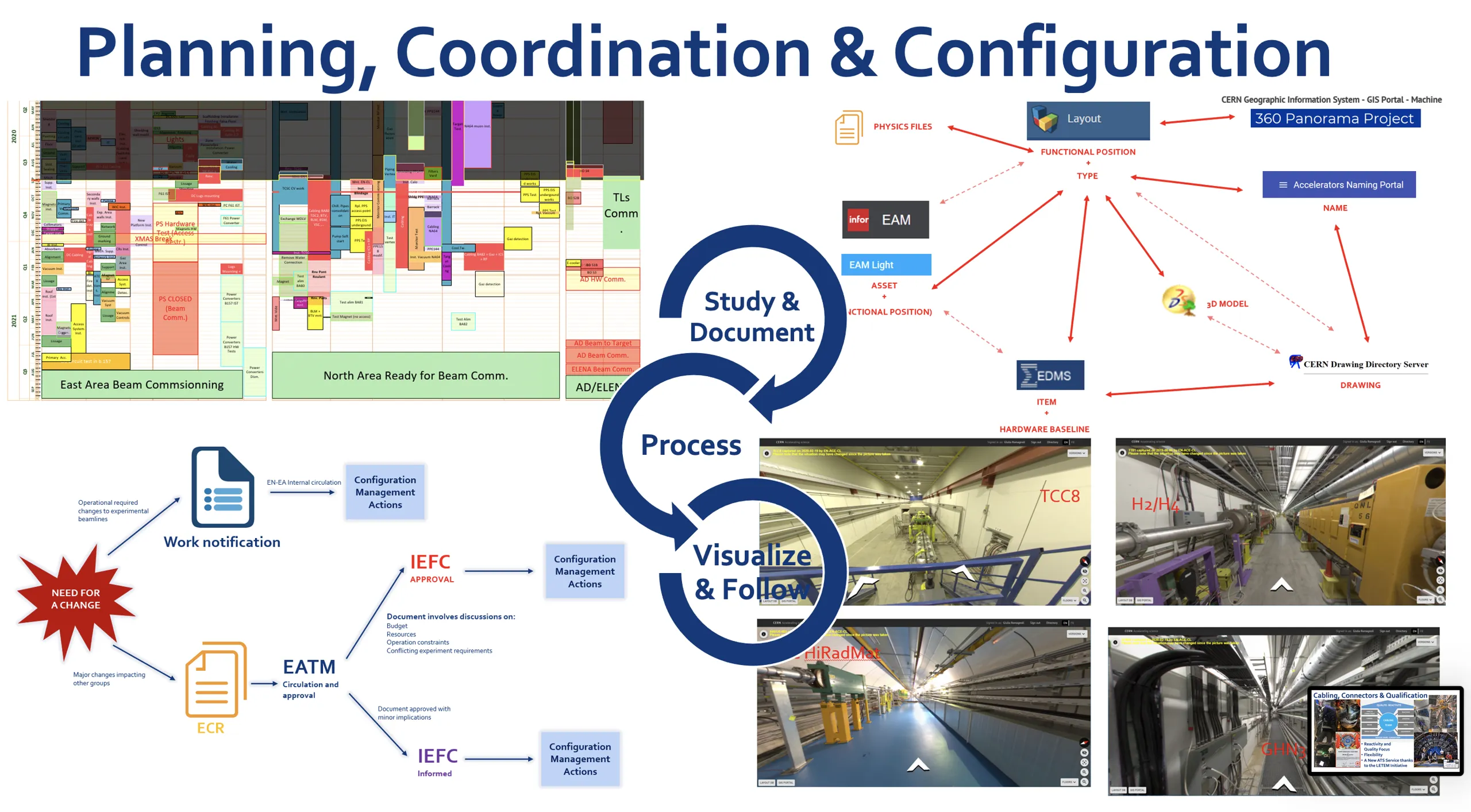
The various entries of the last days have shown the large diversity of activities and responsibilities followed by our group. A detailed coordination and planning is key to ensure that all milestones can be reached. Challenging as such during an LS period, this years’ additional COVID constraints made this exercise far from trivial. Regular iterations with multiple equipment and service groups were essential allowing to minimize delays for the East-Area Renovation (EAR) project, AD or NA consolidation, as well as the work on the ELENA transfer lines to get ready for beam commissioning. Carefully followed by the Experimental Area Coordination Meeting (EACM), in preparation of the restart phase after the lockdown we could identify the most critical activities, optimize the related intervention planning and avoid co-activities, e.g., allowing the EAR tasks to swiftly resume as one of the first projects to advance after the lockdown. In the very same framework and our focus on renovating and consolidating the experimental areas at CERN, we continued the implementation of a new configuration management approach, adopted to have a clear and coherent picture of a particular beamline or experimental area configuration at any given point in time. As you know, unlike as in accelerators, configurations of experimental areas frequently change according to the needs of the experiments, requiring an accurate process of change management based on a process already used for CERNs’ accelerators and transfer lines. The hardware baseline is a breakdown of systems and equipment where technical documents are stored. The Layout Database is a CERN software where functional positions of equipment are registered following specific naming conventions. In addition, panoramic pictures allow to have a real pictorial overview of the beamline without physical access to the areas needed. In addition, an automatic procedure will allow to extract sequence files needed for beam optics in MADX format, readable directly by the beam control software (CESAR). The generation of a simplified beamline layout will also contribute to a more reliable and efficient change management respect to the past. Depending on the complexity of the work and related resource requirements, the infrastructure, beamline, and experimental area changes are detailed either in a work notification (typically for changes in our User areas) or an Engineering Change Request (ECR) for more complex modifications or new projects, then involving also a more consequent support from a larger number of equipment and service groups. Very often the latter also requires management approval of related material or personnel resources where your detailed preparation and documentation work starting already in the early preparation phase is essential. Thanks to your excellent support and strong commitment, this approach has helped reaching many small and medium-sized experiments reaching their approval stage, some of which already mentioned in previous Advent entries. Scanning through the first set of panoramic pictures makes me looking forward for a complete implementation of all our experimental areas, a challenge we are committed to and a tool which will become even more important when we have restarted operation with beam. As we refer to about 8km of beamlines, three major experimental areas, their associated user areas and over 15 dedicated experiments or test facilities, this clearly will take more time and I am thankful for your respective investment and commitment.