
We trap antimatter at AD, now what?

1 DECEMBER, 2023 | By François Butin, Clara Klink, and Maud Wehrle
Since the first storage of antiprotons in 1978, technique in antimatter trapping at CERN has drastically improved. In the AD Hall, several experiments trap antimatter and are now comparing its physics properties to those of matter. The next step for the experiments after trapping antiprotons was to synthesize antiatoms, starting with antihydrogens.
One of the most efficient experiments in this field is the ALPHA experiment and you may have heard of their very new discovery: the trapped anti-hydrogen atoms are behaving similarly in the gravitational field as would “normal” hydrogen atoms, and some of us wished that opposite conclusions could have been drawn! Antimatter being repulsed by “matter gravity” could have explained one of the many mysteries of the universe, as to why the proportion of matter and antimatter observed in the (visible) universe does not match at all the proportion obtained in theory. These first results mean we must keep on studying antimatter, as we do not understand it fully for sure!
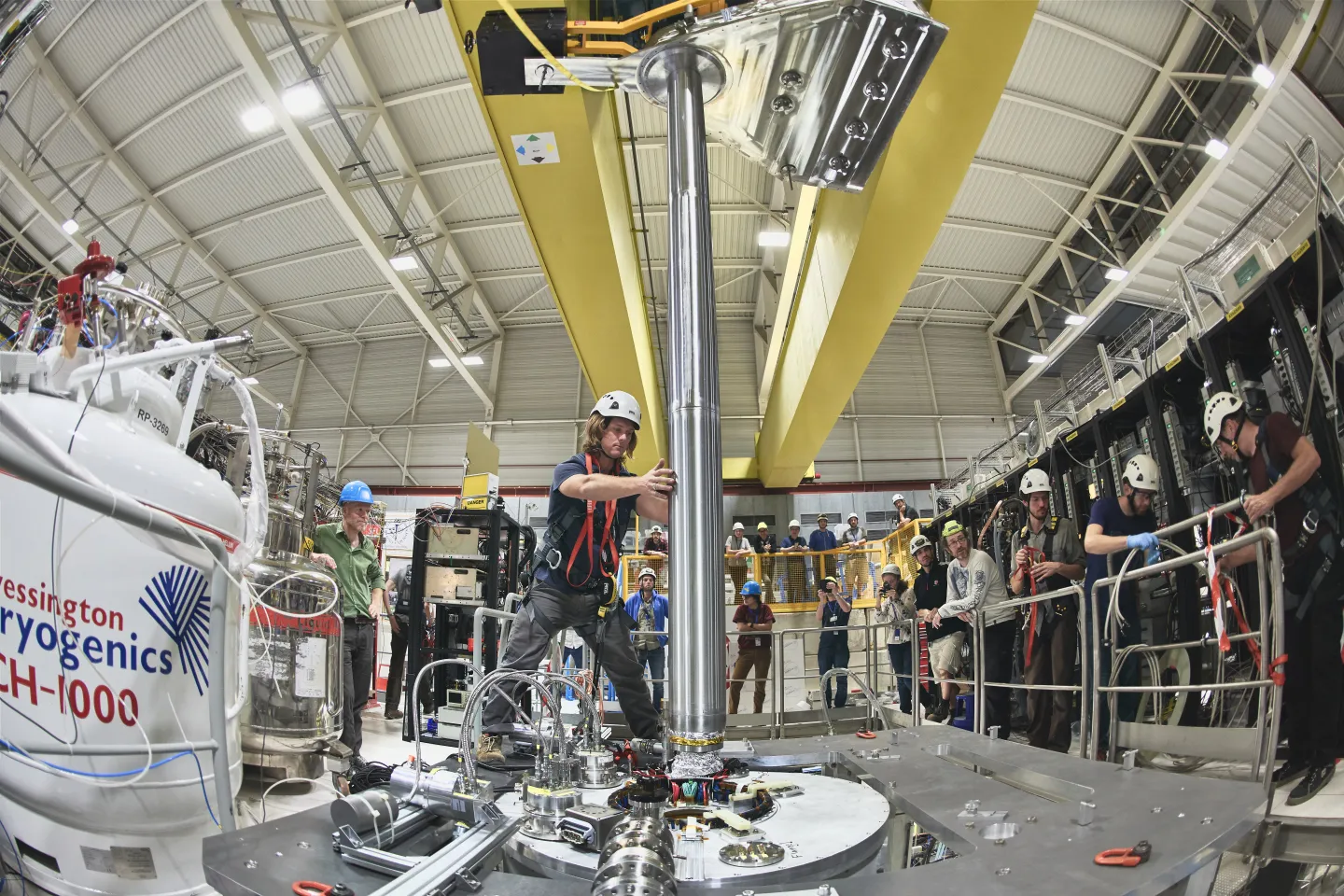
Other experiments in the AD hall are working in parallel on the effect of gravity on antimatter. As the ALPHA experiment will now have to improve its measurements’ precision to validate their statement, the other gravity related experiments (GBAR and AEgIS), should draw the same conclusions with different techniques to confirm, and possibly bring more precision on ALPHA’s findings.
But what about the other experiments? ASACUSA is using spectroscopy to precisely compare the physics properties of antiprotons and protons with each other. BASE is breaking records in comparison measurements precision and is designing a transportable antiproton trap with their device BASE-STEP. But our newbie, PUMA, is facing a completely different challenge. They ought to use antiprotons to study exotic nuclei, which will require to trap antiprotons and transport them to ISOLDE, since exotic nuclei cannot be produced at AD. Antiprotons can annihilate not only with protons, but also with neutrons, which are not easily accessible with traditional techniques: they cannot be probed with electromagnetic interaction. PUMA’s efforts should help to gain a more complete picture of the structure of these nuclei and of the development of other nuclear phenomena.
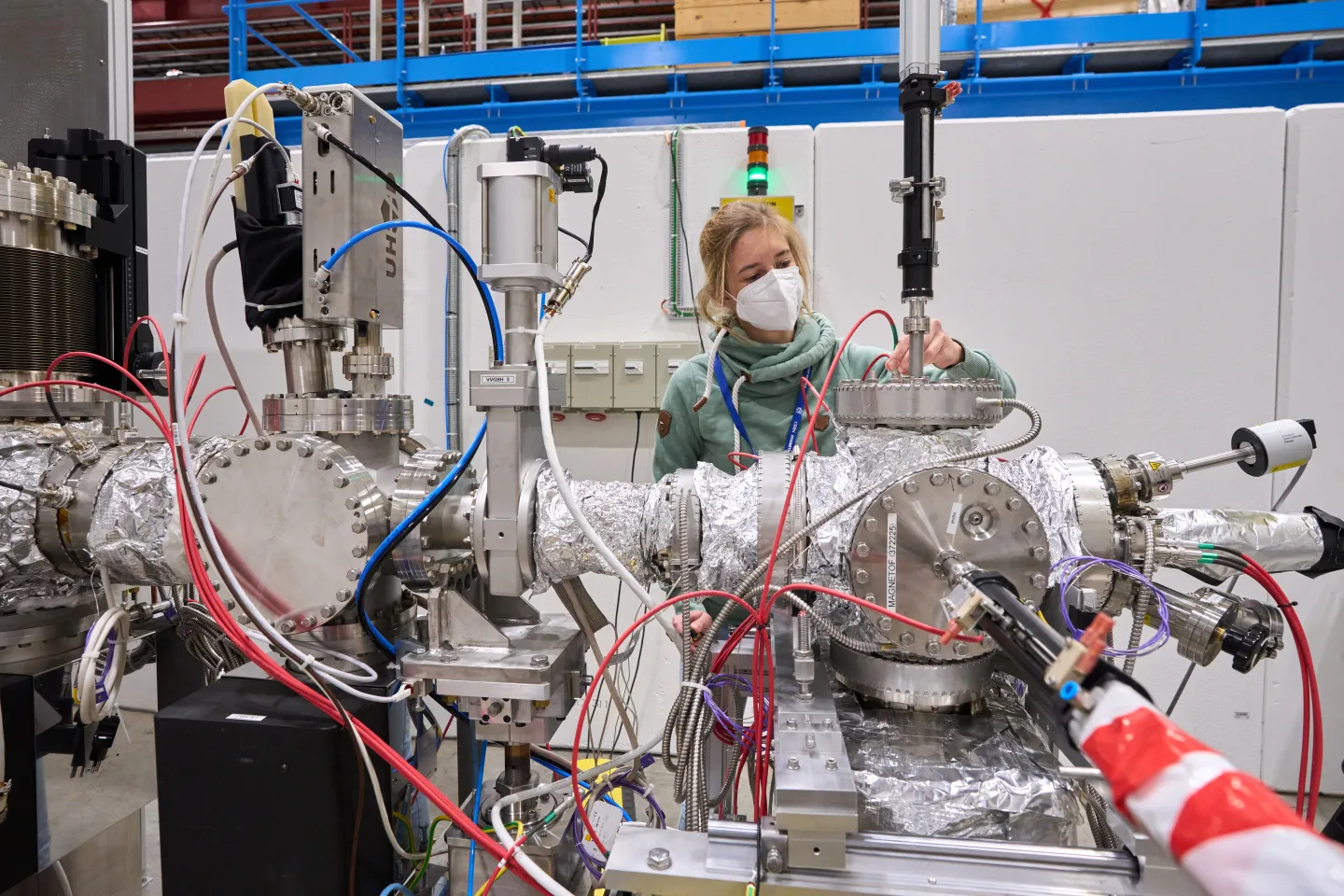
What is a safe mean of transport for antiprotons you would say? This, of course, without building a transfer line between AD and ISOLDE (that wouldn’t have been enough of a challenge for our bold physicists) – trucks on roads of course!
The plan is fairly simple, up to one billion antiprotons are trapped in the PUMA experiment in a tank with incredibly high vacuum properties. The trap is then carefully loaded with the crane out of the PUMA area and onto a truck waiting at the exit door of the AD hall. The truck then leaves the facility towards ISOLDE very slowly and very carefully, using the smoothest roads on the Meyrin site… The trap is finally unloaded and hooked-up to one of the transfer lines of ISOLDE facility. What could go wrong you might think? Well for starters, let’s hope no reckless driver bumps into the truck, but our main worry is the permanent power connection the trap must be connected to, and that starts with installing dedicated power generators onto the truck and next to the AD Hall and ISOLDE.
So, the conclusion is, we trap Antimatter at AD, and it is the very first step of intense studies, synthetization of antimatter and we even will now transport it, but on roads this time! This will open the possibility for other possibly distant labs to benefit from the incredible and absolutely unique facility we have at CERN with the Antimatter factory.