
East Area: Re-Construction started

4 DECEMBER,2020 | By Markus Brugger
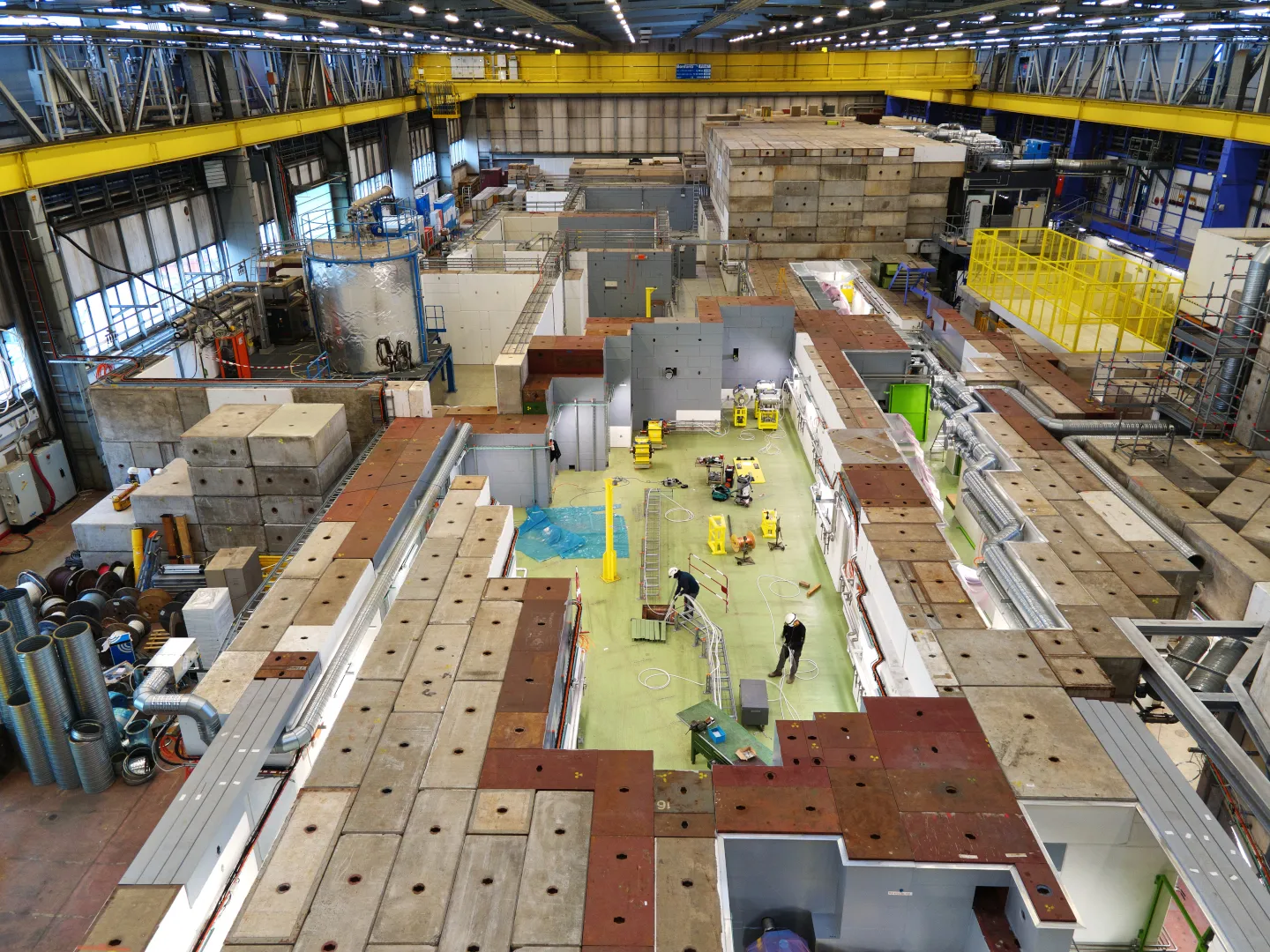
The East Area Renovation (EAR) endeavour, a major project entrusted to us over the past years and has now started its peak reconstruction phase. 2020 brought us from dismantling to construction and it was an incredible experience seeing the East Area in a light we have never had the chance perceiving before. At the beginning of the year the hall was still emptied in most places, the building being in its final renovation steps and the beamlines reduced to a small red line on the floor, precisely prepared by the surveyors laying the basis for the on-going placement of beam elements. During one of my visits early this year, I caught myself thinking “do we get all this back in time?”. But despite COVID challenges, the metamorphosis has successfully moved forward in a fast way: shielding structures were mounted, the PS/EA junction area got very busy and the surrounding areas of the beam lines supplying CLOUD, CHARM and IRRAD got visual again. A major 2020 milestone was the installation of the F61 before the PS closure together with the final preparation of building 251 with the installation of all the new power converters, both successfully reached in time. The new converters, developed at CERN, will now supply the magnets on a cyclical basis, with an energy recovery stage between each cycle. Electricity consumption is thereby expected to fall from 11 GWh/year to around 0.6 GWh/year, already nicely confirmed by recent measurements carried out during the IST phase. The magnet renovation and manufacturing advanced equally well thanks to the enormous efforts of all teams involved. During this phase, more than 250 km of cables were extracted and about 2000 tonnes of shielding blocks moved around.
The EAR project involves many CERN groups from almost all departments, as well as external institutes, successfully interlinked with our group through coordination, provided technical services and support and the project team forming the heart of this endeavour. It is thanks to all of you that this historic experimental area which has served CERN physics for more than half a century, will continue doing so for many more years to come. I am looking forward to 2021 when we will see the first beams coming back – congratulation and thanks to all of you.