
PBC Studies/Experiments becoming reality during the 2021 operation

12 DECEMBER, 2021 | By Lau Gatignon and the PBC team
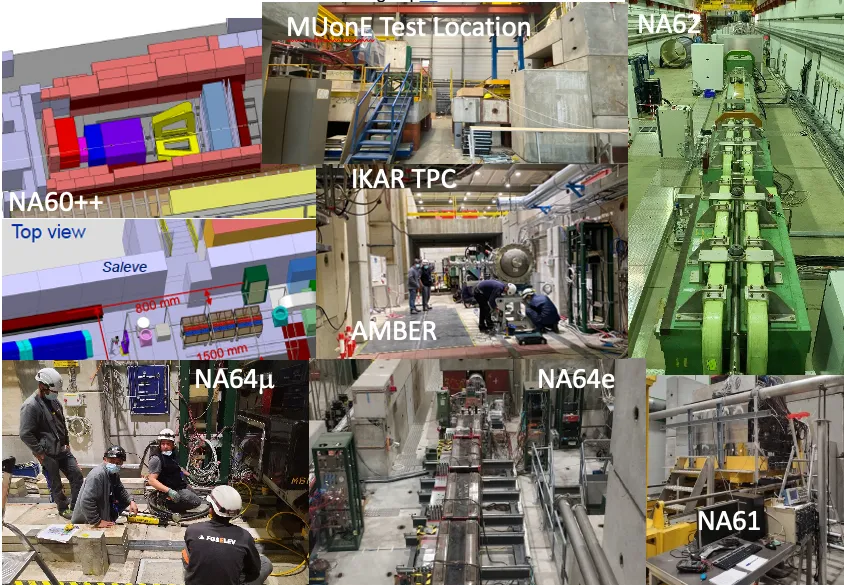
The Physics Beyond Colliders (PBC) study brought in 2021 not only new ideas, but also the first real implementations and data taking. For many existing experiments the proposed new ideas come along with requests for ever higher beam intensities. In particular in the surface halls, those poses real challenges in terms of radiation protection issues. For the future running of the NA61 experiment at 10 times higher fluxes than in the past, a lot of extra shielding has been added during LS2 and in 2021 we had the opportunity to successfully validate it, at least with proton beams.
NA64e in the H4 beam also profited from record electron intensities. On top of that they could move their apparatus into the newly prepared zone PPE144, where they can leave the most critical parts of their apparatus on the beam line, thus avoiding very long commissioning times at each start of run.
The M2 beam line saw, for the first time this century, pilot runs for three new physics experiments: AMBER, NA64m and MUonE. AMBER is a continuation of the COMPASS experiment, but MUonE and NA64mu have completely different physics goals. All three use the unique highest-energy and high-intensity muon beam in the world, however with incompatible requirements in terms of beam intensity and beam properties. AMBER and NA64m installed their apparatus in the PPE211 zone, upstream of COMPASS, whereas MUonE performed parasitic equipment tests downstream of COMPASS. These runs required important beam and infrastructure modifications, in particular in the upstream zone.
Finally, the K12 beam for NA62 was modified to improve background conditions for the NA62 experiment. One striking example was the re-cabling of the first four dipoles in the K12 beam, which allowed an optimization of the muon backgrounds when NA62 runs in the so-called beam dump mode, optimized for dark matter searches. NA62 reported at the recent PBC general meeting a reduction of that background by a factor of 200! Similarly, all the other experiments reported the success of the improvements at this same workshop. All this is thanks to the effective collaboration of all the sections in our wonderful EA group!