
Scaffolding

22 DECEMBER,2020 | By Markus Brugger
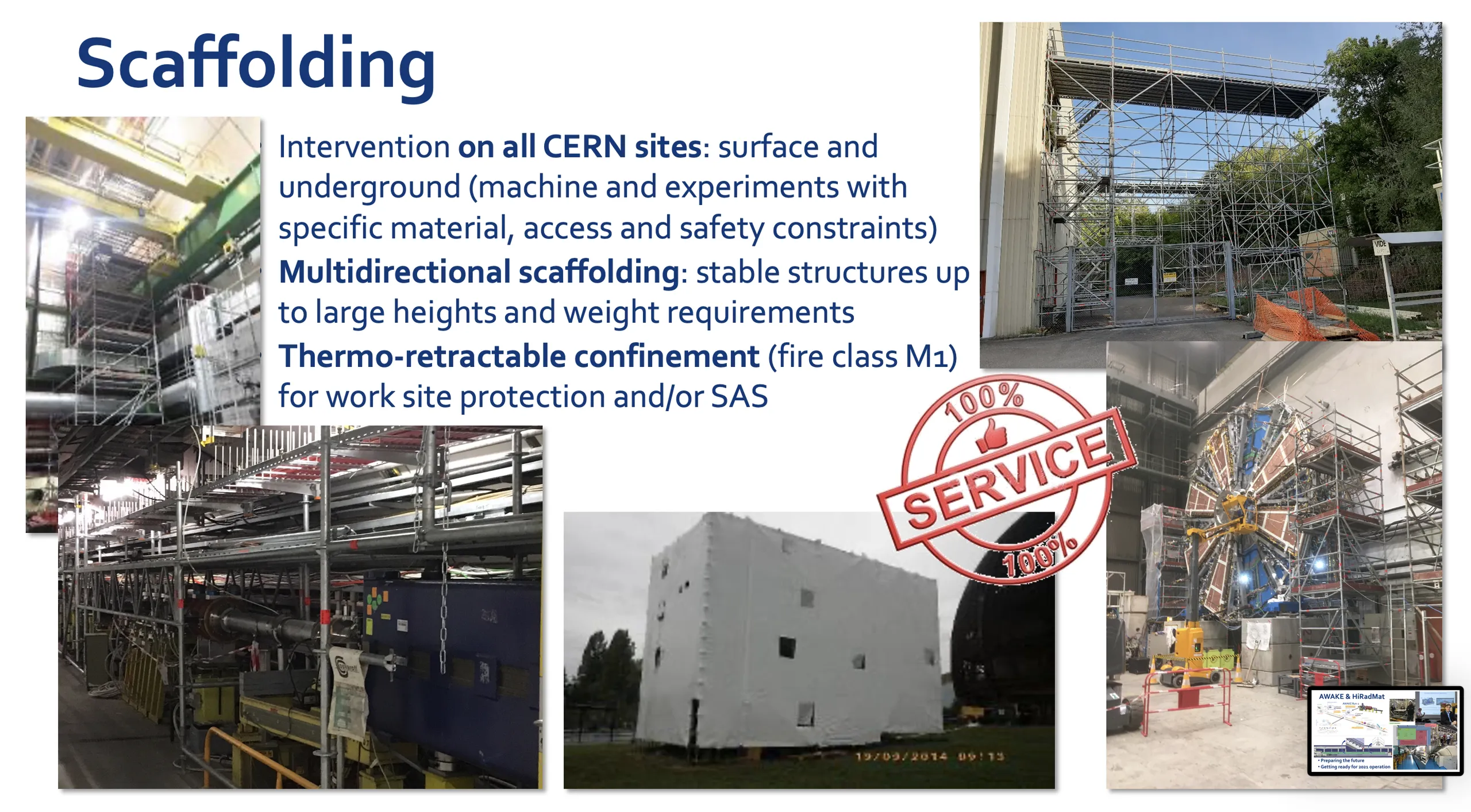
2020 was an incredibly busy year for our scaffolding service, having worksites all around CERN from the injectors to the LHC, the experimental areas and providing multiple support to the LHC caverns. This translated in having periods of up to 12 contractors moving between the various worksites, mounting, dismantling, and following a very tight planning. The always positive and pro-active attitude allowed replying to multiple urgent requests, often detrimental for avoiding delays for LS2 critical activities from many equipment and service groups. To put in numbers, almost 100 scaffoldings were present at the same time around the sites and required regular safety inspections in the period when we were closing down CERN earlier in March this year. The scaffolding contract was well set in preparation of LS2 allowing to address interventions on all CERN sites, surface and underground. This includes machine and experiment environments with specific material, access, and safety constraints. The particularity is applying multidirectional scaffoldings allowing for stable structures up to large heights and high weight requirements (>600 daN/m2), sufficiently flexible to be well integrated in constraining surroundings. In addition, the installation of thermo-retractable confinement (fire class M1) proved highly valuable to allow for effective work site protection and/or the creation of SAS structures. This addresses typically between 400 to 500 scaffoldings during an LS period (representing more than 400 tons of scaffolding material), but also options to extend the contract scope for other surface activities, e.g., during RUN periods. The installation of these scaffolding structures implies a careful safety evaluation, not only during the design and installation period, but also during the exploitation phase where regular safety inspections are needed. A typical lifecycle of such sometimes complex scaffolding structure starts with a user request where an initial iteration is performed to agree on specifications, perform an initial engineering study (e.g., to define the required load class and ground support constraints), provide 3D drawings and corresponding calculations, as well as prepare and follow-up on the worksite both during the construction and eventual dismantling phase. Inspections are performed from our side first together with the client to ensure the handover of responsibility before the exploitation, but also formally quarterly and ad-hoc whenever required. For the latter, modifications are often required and linked to the character of evolving work sites, thus requiring iterating the steps above accordingly. It is the large variety of worksites, designs and often specific requirements making this service challenging and rewarding at once, confirmed by the multiple and highly positive feedback received throughout 2020. Many thanks and congratulations to all team members.