Beamline for schools
4 DECEMBER, 2024 | By Lau Gatignon

In 2013, the Beam Line for Schools (BL4S) project was invented and initiated by Christoph Rembser. He proposed to invite teams of secondary school students from all over the world to submit ideas for experiments that could be realised within a short time in one of the CERN beam lines. After a careful selection process, the winning team would then come to CERN to perform the experiment. The idea was enthusiastically picked up by the Outreach team at CERN and so the first call for proposals went out later in that year.
As these kinds of projects do not work by themselves, Christoph contacted our group to check if this idea would be feasible and if we would be willing to support this activity. The East Area, and particularly the T9 beam line, was found very suitable for this adventure. We, the EA group, played a key role as we ensured with different groups (e.g. beam instrumentation, EP-magnets team, safety) that the pupils could use some of our standard beam-line equipment (detectors, MNP19 magnet). We also handed out detailed documentation about the T9 beam line and area.
Fuelled by this enthusiasm, the EP department immediately allocated a fellow to this activity, set up a dedicated team led by Markus Joos including two young physicists for the practical matters and many EP and outreach experts joined. Podcasts were set up to announce the project world-wide, followed by the call for proposals in December 2013. The success was huge and unexpected: 455 teams worldwide applied and the project was quoted in many international newspapers.
CERN finally set up teams to select the best 16 proposals, which were then evaluated by the SPSC during a special meeting. The most interesting idea came from a Greek team that wanted to measure the branching ratio of the π+ → e+ν decay (around 10-4). The proposal was brilliant, but it would have required a large and costly vacuum tank, exceeding budget and timescale. However, without it, the experiment would be swamped by background. The committee felt that they still deserved to come, but wanted to have a tangible result to come out for this first edition. It was finally decided to invite them but also a second team: a Dutch team proposing a home-made calorimeter. Giving two teams the opportunity to showcase their ideas then became a tradition at BL4S.
The first experiments that took place in 2014 were a great success. Beforehand, Christoph Rembser presented the project in the Council meeting and got a standing ovation (exceptional in council meetings!). Indeed, the full CERN council plus directorate visited the students during the September council week. These visits became a tradition for many years to come. The Dutch team even published their results in the journal of the Dutch physical society.
Following this great success, CERN continues the program until today, each year inviting two winning teams. During LS2, DESY agreed to allocate space in their areas for the program. Thanks to the overwhelming success, DESY became so enthusiastic that they now still continue BL4S. Therefore, there are now 3 winning teams each year: one at DESY and two at CERN. Each year, CERN proudly announces the winning teams in a Press Conference.
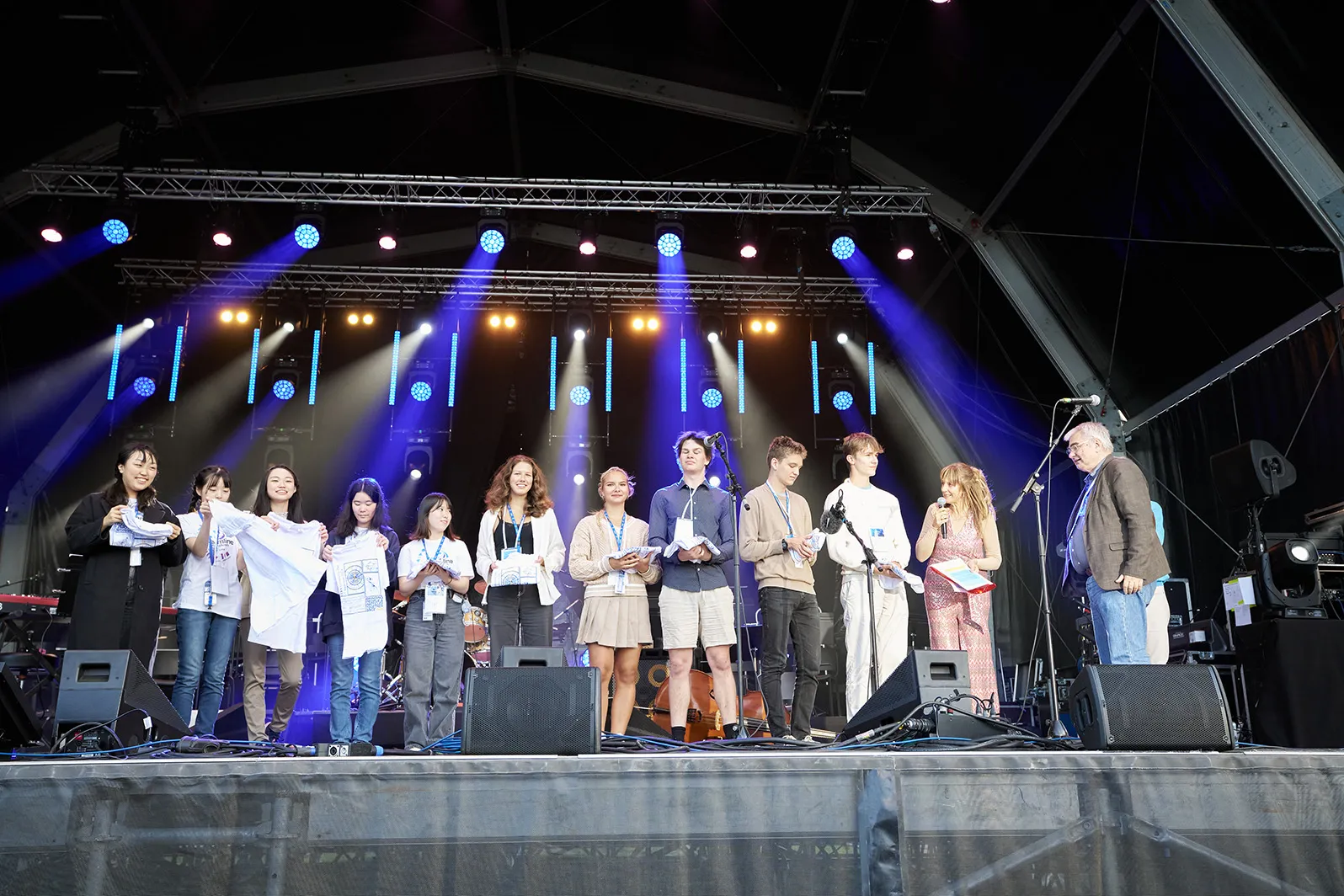
2024 was a special year for BL4S. On the 16th of September, BL4S celebrated its 10th anniversary with speeches by ATS director Mike Lamont and DESY director Beate Heinemann. Ambassadors from the states of the winning teams (Japan, Estonia and the USA) gave presentations. The 2024 winners at CERN were even honoured at the 70 years celebration:
Over the years there have been winning teams from 19 countries in 4 continents. The number of participating teams is just enormous. Many of the winners have taken up scientific studies afterward.
While already supporting the winning teams with our superintendents and beam line physicists, from next year on, we plan to further increase our collaboration. A new graduate will be shared between BL4S and the LE section, working on common topics for the East Area and acting as a support scientist for the winners.