
BE-EA’s Eras Tour to IPAC 2024
02 DECEMBER, 2024 | By Florian Stummer

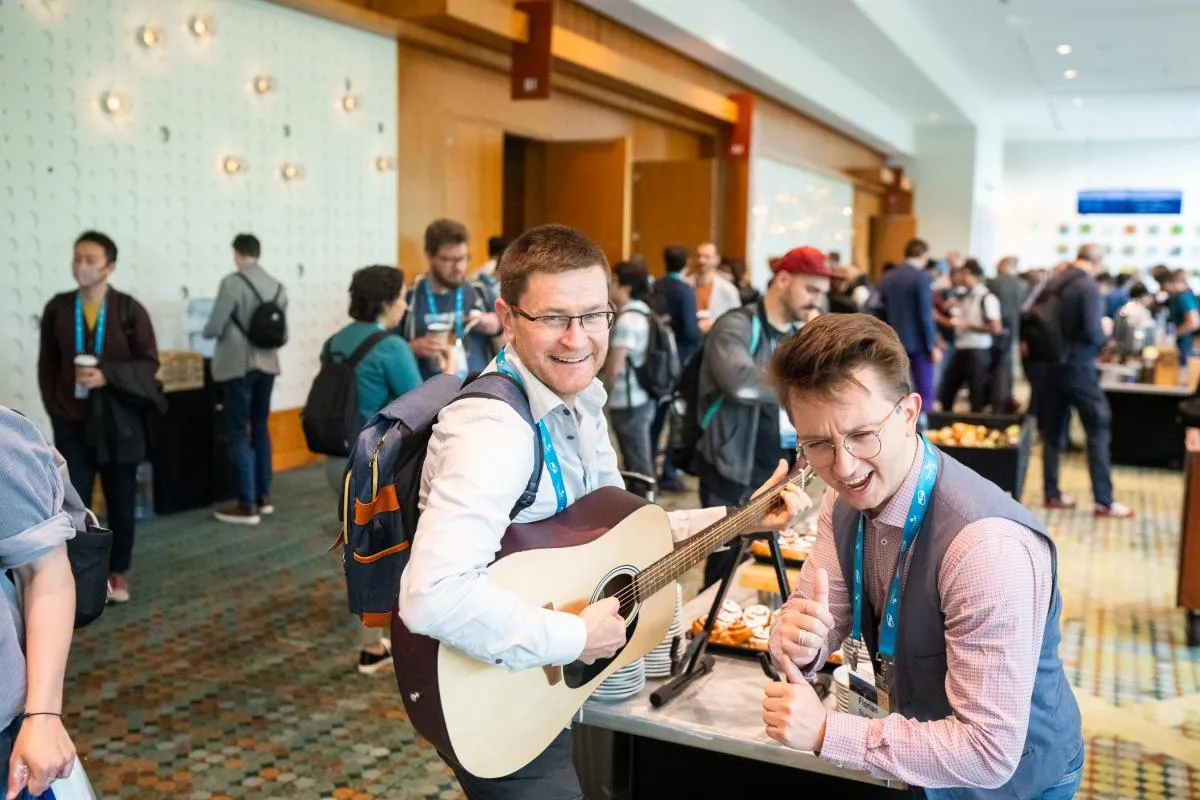
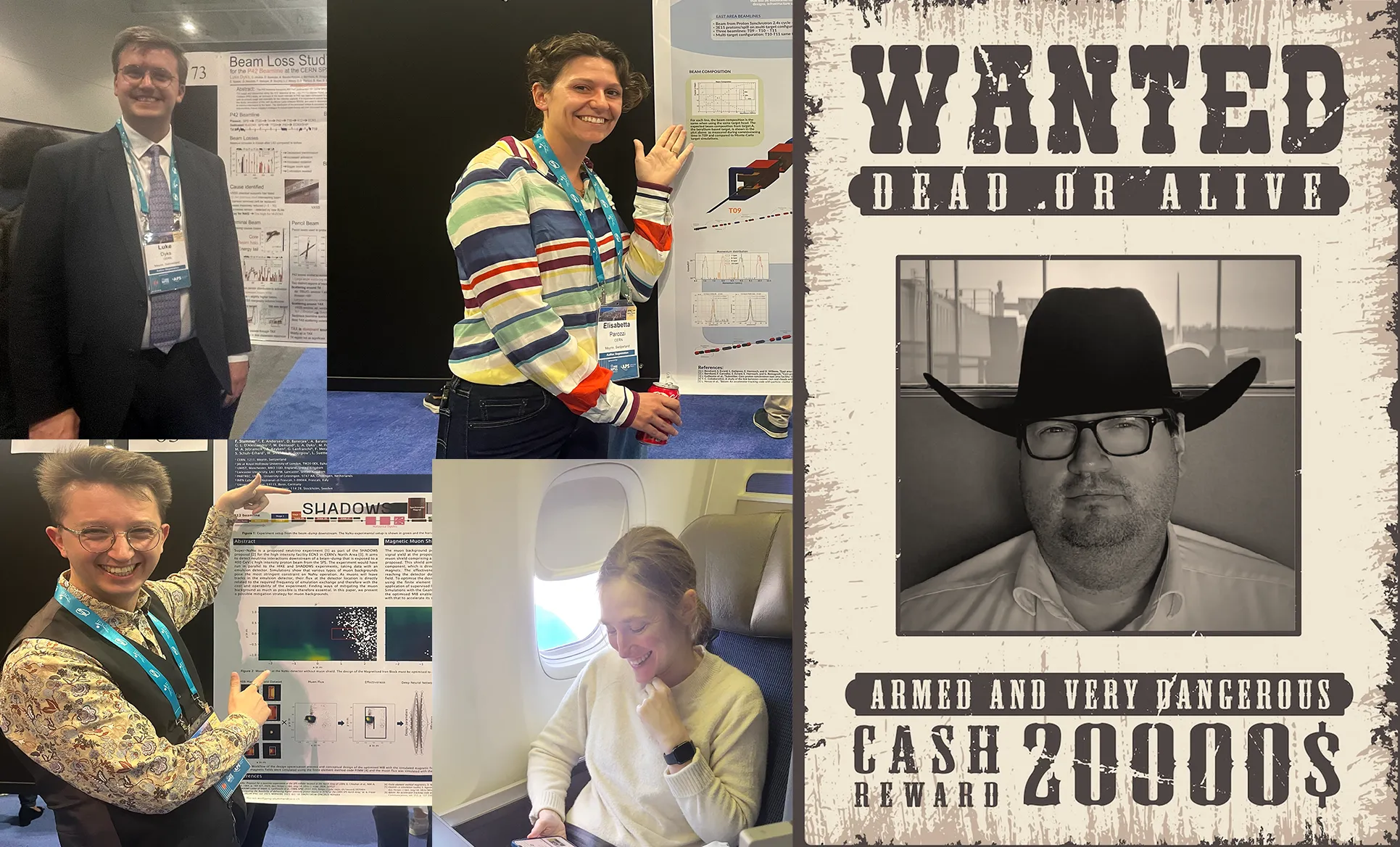
This May, Elisabetta, Kristiane, Johannes, Laurie, Luke, and I took a plane from Geneva to this year’s IPAC, the international conference on accelerator physics, which was held in Nashville, Tennessee. Many CERNies were present as well as a broad mix of people from other institutions such as Fermilab, BNL, RAL, and many more. The whole setting offered a great chance to catch up with them on the latest accelerator news since the past conference. Between country music, cowboy hats, and line dancing, we enjoyed the conference talks and seminars, and presented the latest status of our studies during the poster sessions.
My contribution focused on designing magnetic shielding to reduce the muon-induced backgrounds of Super-NaNu, a part of one of the proposed ECN3 facility that was supposed to house the HIKE and SHADOWS experiments. Super-NaNu would have been a neutrino experiment aiming to search for new neutrino physics in an off-axis setup alongside the K12 beamline. Its goal was the confirmation of the τ neutrino with a high confidence. While the τ neutrino has been found by experiments such as DONUT at Fermilab, OPERA at LNGS in Italy, and Super-Kamiokande in Japan, the detection rates never reached a significance of 5σ that is normally required for a definitive discovery. Still, the DONUT data set of 4 events (later 9) was generally accepted because the particle was expected to be there, but a definitive proof would have been a classical textbook measurement.
As the muon backgrounds are so important in such experiments, an AI-aided approach was developed within our group to design a magnetic shield that reduces the background in the off-axis detector region by 55%. While this is already remarkable by itself, it would have enabled Super-NaNu not only to reduce the operating cost of its most expensive detectors, the emulsion detector, that thus only need to be exchanged half as often, but also would allow the experiment to move closer to the beam axis. This increases the signal rate and with it its potential to discover new physics.
Attending IPAC was an enriching experience and served as an excellent platform to exchange ideas and insights with colleagues from around the world. The conference not only allowed us to have valuable professional discussions but also offered a unique cultural experience, blending scientific exchange with the vibrant local culture of Nashville. I returned inspired and with several new ideas to implement in our ongoing projects.