
Of safety files and vacuum chambers
09 December, 2024 | By Havin Ozcanli

Since February 2024, I am part of our group. Over the past 10 months, my work has mainly focused on writing safety files for NA-CONS. This task gave me valuable insights not only into the North Area but also into other CERN facilities and their complex systems. However, every safety file has to be finished eventually. Once the big sections of the files were completed, I decided to dedicate my remaining months to supporting other projects where I could make a meaningful contribution.
Thanks to Yacine and Filipa, I was introduced to Giulia, who invited me to assist with the configuration management of the North Area beamlines.
And so began my adventure with the M2 beamline! After an initial meeting with Giulia, I gained a better understanding of the Layout Database and the positioning of vacuum and magnet elements along the beamline. This, combined with the knowledge I’d acquired while writing safety files, gave me a solid foundation to dive into the M2 beamline project.
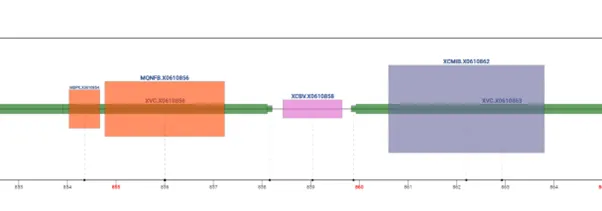
The M2 beamline is a secondary beamline, stretching approximately 1.2 km from the T6 Target in TCC2 to EHN2. It’s CERN’s high-intensity muon beamline, serving multiple experiments along its path. One of its most notable users is the AMBER experiment, located in EHN2.
Over the past two to three months, I’ve been working on updating the vacuum schematics of the beamline in the Layout Database. This involved interpreting older vacuum schematics and translating them into a clear, updated visual representation of the M2 beamline. Step by step, I’ve been creating elements like vacuum chambers, windows, and bellows, assigning them names and positions, and aligning them to form a continuous representation of the beamline. It’s incredibly satisfying to see the green line come together, symbolizing the vacuum system inside the magnets and between other beamline elements, e.g., beam intercepting devices and beam instrumentation.
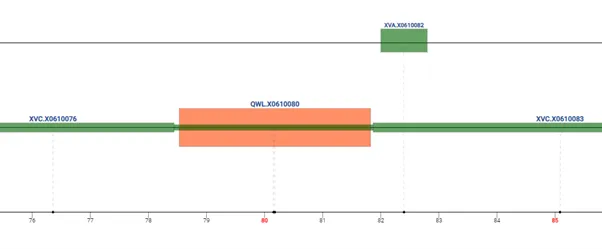
Currently, the M2 beamline operates under primary vacuum (≈ 10⁻² mbar), but around 80 m of the total 1.2 km lack vacuum coverage. During LS3, several modifications are planned to improve this, reducing the non-vacuum sections and enhancing overall coverage. That’s why having an up-to-date schematic of the beamline vacuum system today is so essential.
A recent addition to the schematics allows us to represent vacuum pumps as well. Over the past few weeks, I’ve been working on positioning vacuum assemblies — such as pumps, valves, and controls — so that they’re accurately represented alongside the beamline.
My time in the EA group and the BE Safety Unit has been a transformative experience, offering me valuable perspectives on CERN’s diverse facilities. I’m deeply grateful to Filipa, Yacine, and Giulia for their guidance and support throughout this journey. This year has been an incredible learning experience, and I’m thankful for all the opportunities I’ve had to grow alongwith and contribute to.